





You have until 26th October to register for the 2nd edition of the "My Financial Future" competition, promoted by Banco de Portugal and the CFA Society Portugal.
In this competition, you will be challenged to solve a case study on personal finance and justify your decisions in areas such as managing the family budget, savings, investments or credit, topics that are central to your life and that you must master as soon as you enter the job market!
More than 400 students from 27 universitiesparticipated in the first edition. This year it could be you!
You can find more information, the entry form and the competition rules at Banking Customer Portal.
If you have any questions, send an email to info@portugal.cfasociety.org or to formacao.financeira@bportugal.pt.
Don't miss out on this opportunity: get your team together and sign up!
The support awarded corresponds to 2,000 euros per academic year, with the possibility of renewal until completion of their Master's degree, provided that the conditions laid down in the regulations are met.
The scholarships also include a one-off additional support of 2,000 euros for a period of international mobility under the Erasmus programme or equivalent.
Eligibility conditions
Students can apply if they have:
👉 More information, regulations and the application form on the Gulbenkian Foundation website: https://gulbenkian.pt/bolsas-lista/bolsas-de-merito/
Next Monday, a new dining area will be inaugurated in the Quelhas building, adding to the range of options available to ISEG's academic community. It will be open from Monday to Friday, between 7:30 and 19:00.
The new infrastructure integrates two distinct areas: the Lisbon Emotionsdedicated to buffet service, and the Bio Emotions, which will operate as a cafeteria and grab & go, offering quick and practical solutions for everyday life.
With this opening, ISEG now has another quality and convenient option for meals on campus, promoting the well-being and conviviality of its community.
Welcome to ISEG! We are ready to welcome you and to mark the beginning of one of the most important stages in your life.
Registration
Students entering the 1st year for the first time, through the National Competition for Access to Higher Education, must register/enrol online from 15 (10h00) September 17, 2025 (23:59).
Consultation here all the information.
After the publishing of the first-phase placements in higher education for the 2025/2026 academic year, the number of students who placed the ISEG Lisbon School of Economics & Management as their first option broke records and increased by almost 10% compared to 2024/25. An indicator that confirms the growing attraction and confidence of students in ISEG, is the number of students who applied exclusively to ISEG courses — a number which increased by 6.7% compared to 2024/25. With all 1st phase places filled, ISEG begins the academic year with excellent student placement results.
ISEG thereby strengthens its position as a leading school of Economics and Management in Portugal and in Europe, with two degrees in the national Top 10: Applied Mathematics for Economics and Management (MAEG) and, new this year, Applied Mathematics for Economics and Management (MAEG taught in English).
According to João Duque, Dean of ISEG, "The results of this first phase are a clear sign of students' growing confidence in ISEG. The significant increase in first choices and exclusive applications shows that young people recognise the excellence and differentiation of our School. It's particularly gratifying to see the MAEG degree achieve the highest entry average in Lisbon and two of our degrees appear in the national Top 10. These results reinforce ISEG's commitment to the education of leading professionals and to establishing itself as an economics and management school of excellence in Portugal and Europe.”
The ISEG Welcome Week is an important moment for integration into ISEG, welcoming more than 1,400 new students (450 Bachelor’s, 850 Master's and 100 PhD degrees).
Strongly committed to welcoming new students, ISEG once again has prepared a distinctive Welcome Week.
The new undergraduate students are welcomed on 1 September, with a general welcome session, integration activities and a peddy-paper (treasure hunt) to explore ISEG. On 2 September, new students will get to find more about the ISEG XLAB and meet the degree coordinators, through classroom sessions for the respective degrees. The reception is completed with the ISEG Action Dayand 3 September. This is a day away from campus entirely dedicated to fun and sporting activities. The event, which takes place on the rugby pitches of the Instituto Superior de Agronomia, is a form of integration into higher education which is based around the promotion of sports, mutual help and team spirit.
"At ISEG, integration begins outside the lecture theatre. We welcome more than 1,400 new students with a Welcome Week that promotes team spirit, well-being and healthy habits, preparing them to be not only excellent professionals, but also conscientious citizens," explains João Duque.
By the end of the week, there will also be the Welcome Masters (3-4 September); the Welcome PhD students (2 September); and Welcome International Students (5 September). The week closes with an invitation to all students to the Welcome Party, on 5 September, starting at 18.00 at the ISEG Campus.
This Sunday, 31 August, at 10.00, ISEG will hold a Welcome Family reception for the parents and families of new undergraduate students. The meeting will be led by the Dean of ISEG, Professor João Duque, and will include a presentation of the School, as well as information on careers and international mobility, and will be followed by a guided tour of the campus. The aim of this event is to learn more about the School and to emphasise the role of families as an integral part of ISEG's academic community.
"At ISEG we believe that the integration of students begins with their families. Welcome Family is a unique moment of proximity, where parents and relatives are invited to get to learn more about the School, its values and the spaces where their offspring will live for the next few years. We want them to feel part of this community from day one, because we know that academic success is also built on the support and trust of families. Our goal is simple: proud parents and even happier students," says João Duque.
For those awarded a place resulting from the National Contest for Access to Higher Education
Welcome to ISEG! We are ready to welcome you and to mark the beginning of one of the most important stages in your life.
Registration
Students entering the 1st year for the first time, through the National Competition for Access to Higher Education, must register/enrol online from August 25 to 27 (10h00), 2025 (23h59).
Consultation here all the information.
Would you like to help new undergraduate students adapt to ISEG? Would you be prepared to share experiences, give advice and accompany those who are taking their first steps in our academic community?
This is your chance! Applications for the Mentorship Programme are open until 24 August.
If you are a 2nd or 3rd year undergraduate student and with a Master's Degree from ISEG, you can be part of the team of mentors who welcome and support new students, helping them to integrate and start their #lifeatISEG.
The programme will run for the first seven weeks of the academic year, with weekly sessions, and which are compulsory on 1 and 3 September.
Sign up here!
See more information and the regulations here !
Our new artificial intelligence chatbot, developed in collaboration with Noesis, was in the news for its pioneering nature in higher education in Portugal, by providing specialised 'mini-agents' to respond more quickly and effectively to the doubts of anyone in the academic community.
According to Winnie Picoto, ISEG's Vice-Dean, "We want to modernise the way we communicate with potential future students and everyone in the School community, making access to information more direct and accessible.
This way, we continue to affirm ISEG as a school of reference that is committed to the future.
News available on this link.
Further information here.
These are books that inspire, challenge and make you think - stories and ideas that help you look at the world through different eyes and feed your imagination during those long summer days. We hope that these recommendations will be good companions on the road, on the beach or on the sofa, and that they will spark your curiosity for the coming academic year!

Monsieur Ibrahim and the Flowers of the Koran, by Éric-Emmanuel Schmitt
At a time when the conciliation of peoples seems like a utopia, this 'little' book gives us a noble and conciliatory vision of humanity. The book tells the story of a Jewish boy (Momo) and an old Arab grocer (Monsieur Ibrahim). Momo lives alone with a cold and distant father. Monsieur Ibrahim is welcoming, friendly and available. Together, "despite their different cultural backgrounds", they build a friendship that transcends all borders.

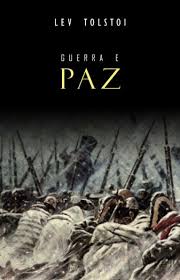
War and Peace, by Leo Tolstoy
War and Peace is one of the greatest novels of 19th century European literature. Tolstoy invites us to immerse ourselves in Russia at the beginning of the 19th century, with the story unfolding at the time of the invasion of Napoleon's army.
War and Peace excellently combines a description of the way of life of Russian high society and the advance of the invading troops through Eastern Europe with masterly descriptions of battles and the defensive strategy of the Russian army.
In the end, Tolstoy dedicates himself to an essayistic analysis of war and peace, going beyond fiction. Although not an easy book - and recommended only for regular readers - it's a fantastic novel for learning more about the historical period in which the action takes place, by the hand of a great writer. It is an excellent occupation for long summer afternoons, perhaps to help enjoy the privilege of your last truly great summer holiday.
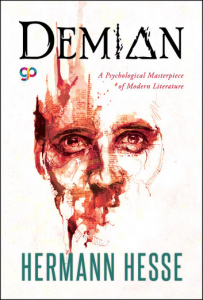
Demian, by Hermann Hesse
With echoes of Jung and Gnosticism, Hesse explores themes such as spiritual awakening, the loneliness of independent thought, the confrontation with the inner shadow and the search for a personal sense of truth. More than a formative novel, Demian is an invitation to cross the boundaries of conformity and listen to the inner whisper of what we are... or could be. A short but profound read, ideal for those who, in the silence of summer, dare to think of themselves as an enigma to be unraveled.

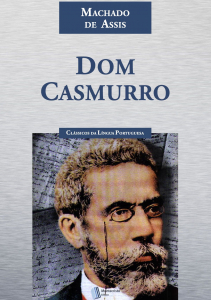
Dom Casmurro, by Machado de Assis
Machado de Assis is one of the great names in Portuguese literature. "Dom Casmurro", Machado de Assis' masterpiece, is much more than a literary classic; it is an intriguing journey that continues to captivate readers decades after its publication. 'Dom Casmurro' is not a passive read; it challenges the reader to think, to question, to doubt the narrator and to read and interpret between the lines. This active interaction makes the reading experience extremely rewarding and thought-provoking. Despite being published in 1899, Dom Casmurro remains remarkably relevant today. The themes it explores - love, jealousy, uncertainty, memory and the complexity of human relationships - are universal and remain relevant in any period.

I Sing and the Mountain Dancesby Irene Solà
Violent and tender, magical and realistic. This book takes us to the mountain, to be a cloud, a person or a bear, and to feel stories and time on a scale that is both cosmic and intimate.

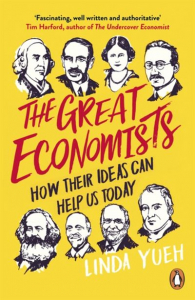
The Great Economists: How Their Ideas Can Help Us Today, by Linda Yueh
I suggest reading this book for its remarkable balance between theory and practice. Linda Yueh historically contextualizes the principal economic ideas and clearly shows how they remain relevant to the current challenges faced by governments, companies and citizens. For students and professionals in economics and management, this bridge between classical economic thought and the decisions of the contemporary world is especially enriching, as it stimulates a critical, analytical and action-oriented vision. It is a work that helps to develop strategic and reasoned thinking, ideal for those who aspire to be more than a technician: a true decision-maker with historical awareness and a vision of the future.

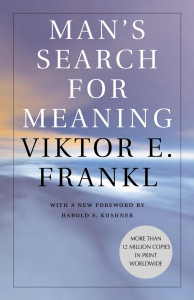
Man's Search for Meaning, by Viktor E. Frankl
In the times we live in, marked by the speed of change, this book reminds us that the human condition - with all its doubts, fears and hopes - is timeless, and helps us to stop, reflect and understand what it is that really matters.

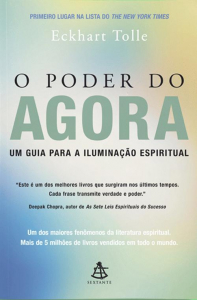
The Power of Now, by Eckhart Tolle
This is a magnificent and timeless work, inspired by the Buddhist tradition and Stoic philosophy. The central idea presented by Eckhart Tolle is that a substantial part of emotional suffering is due to 'rumination' about the past or anxiety about a future which we can't control; recurring projections of the mind that take us away from the present moment. The author teaches us to direct our attention to the present and to be aware of the 'now', in order to escape the whirlwind of thoughts that accompany us on a daily basis, to live a more 'mindful' life and to find peace and liberation.

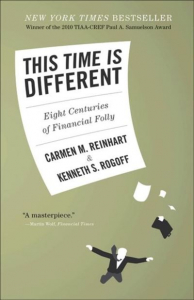
This Time Is Different, by Carmen Reinhart and Kenneth Rogoff
The book analyses eight centuries of financial crises across 66 countries, showing that, despite recurring claims that 'this time is different', the patterns of financial collapses - such as government defaults, banking crises and inflation - are repeated throughout history.
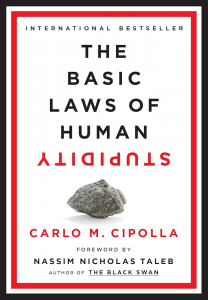
The Basic Laws of Human Stupidity, by Carlo M. Cipolla
I've been hearing a lot lately: 'This is getting worse and worse!', 'Every day is a surprise worse than the last' or 'This has already crossed the line'. But were we better off in the past and are we actually getting worse?
Well, it seems that this feeling is not new and was explained very well by Carlo Cipolla, an Italian researcher, who wrote the essay "The Basic Laws Of Human Stupidity" in the last century.
With a very unique style, full of humour and satire, Cipolla analyses human stupidity, defining five 'fundamental laws' that explain how stupidity is constant and also the most dangerous thing that exists in all societies. This powerful force threatens prosperity and progress and, if we continue to ignore its power, we are doomed to failure.

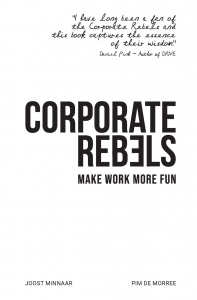
Corporate Rebels: Make Work More Fun, by Joost Minnaar and Pim de Morree
These two authors have traveled the world interviewing leaders of companies that have radically changed the way they do business and their relationship with their employees/ collaborators (or whatever you want to call them) and the communities they work in. With courage, these leaders have allowed room for creativity and prioritised the well-being of everyone they work with. The increase in profits has come on its own.
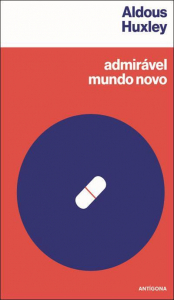
Brave New World, by Aldous Huxley
A very current classic that exalts the central role of the human person in building the interrelationship between technology, science and society. A parable that describes a utopia and warns us of the risks of dehumanization, raising the importance of human relationships.
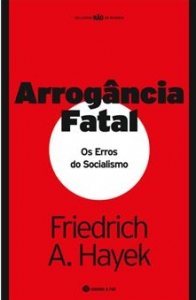
Fatal arroganceby Friedrich A. Hayek
Fatal Arrogance is an erudite, dense book, not always easy to read, written by Nobel Prize winner Friedrich Hayek. Sometimes a little dated, but with the indisputable merit of forcing us to think and easily taking us out of our comfort zones.

The Idea of Europe, by George Steiner
In these 64 pages, George Steiner distinguishes what it is to be European: it's living in a street or square that harks back to history (have you ever wondered who Miguel Lupi was or who the 'Francesinhas' were?), it's having a meeting point in the café and it's being able to walk everywhere in a landscape shaped by man. In between, you'll find a series of curiosities, names and bridges, works and doors to other readings, journeys or simply Wikipedia searches.
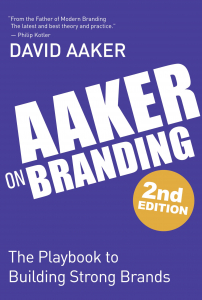
Aaker On Branding: The Playbook To Building Strong Brands, by David Aaker
A solid introduction to the world of branding by David Aaker, a world reference in the field.

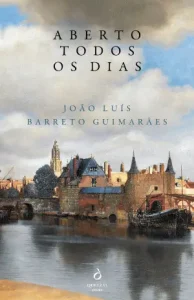
Open every dayby João Luís Barreto Guimarães
Open every day (2023) is a book of poetry that has accompanied me ever since I discovered it. I suggest it as an invitation to take a fresh look at our daily lives, where we rediscover everything that surrounds us: objects, shapes, breathing, surprises, human beings, time, in short, everything that makes up our world and our concerns. João Luís Barreto Guimarães won the Pessoa Prize in 2022 and his work is internationally recognized, but he is also a surgeon and in recent years has introduced the teaching of poetry at the Faculty of Medicine in Porto (Introduction to Poetry and Medicine). Open every day It's this openness about the world that we need to cultivate. Two suggestions: "Things waiting to happen" and "Here".
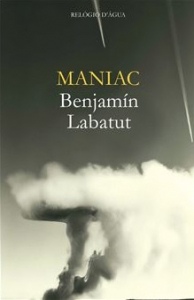
Maniac, by Benjamín Labatut
This summer, let yourself be challenged by this fascinating literary journey into the heart of mathematics and science (from the history of nuclear energy to computing), revealing how these ideas intertwine with the economy and world politics. Based on real facts, this book makes us rethink the limits of rational thought and the profound impact of ideas on human history.

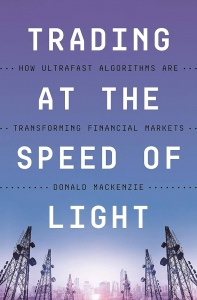
Trading at the speed of light: how ultrafast algorithms are transforming financial markets, by Donald MacKenzie
In recent decades, the financial markets have been transformed by High-Frequency Trading (HFT), a type of ultra-fast trading based on technology, artificial intelligence and algorithms, which allows profits to be made through micro-trades in milliseconds. Sociologist Donald MacKenzie investigated this phenomenon through interviews and direct observation, revealing how HFT depends on physical infrastructure, proximity to exchange centres and complex market signals. Although widely accepted on stock and futures exchanges, HFT faces resistance in debt and foreign exchange markets controlled by large banks. The research also highlights the political, economic and environmental impact of HFT, underlining the importance of materiality in modern financial markets.
Book review here.

ISEG has announced the opening of a recruitment contest for two Assistant Professors and three Assistant Professors .
For further information, please contact the Human Resources Division at drh@iseg.ulisboa.pt.