







The second edition of Unite! Research School will take place from 3-7 November 2025, in Autransnear Grenoble.
This year's programme will highlight some of today's most critical and captivating topics, including space and technology, biology, artificial intelligence (AI) and cybersecurity. It will also explore the transversal skills needed by aspiring scientists...
This course is a Blended Intensive Programme (BIP), which awards 3 ECTS to Master's students and 30 hours of training to PhD students, upon completion.
Applications: on the platform Metacampus
Deadline for applications: 30 July 2025
For more information, contact Professor Luís Silveira (lms@tecnico.ulisboa.pt) and visit the official site of Unite!
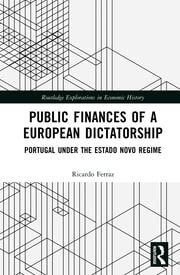
The new book by Professor Ricardo Ferraz, entitled Public Finances of a European Dictatorship: Portugal under the Estado Novo Regime, is now available on the website of the prestigious British publisher Routledge, part of the group Taylor & Francis.
The book has a Foreword by Professor Joaquim Miranda Sarmento and an Afterword by Professor Nuno Valerio.
This book contributes to the growing interest in economic history, especially in the role played by peripheral or smaller countries. With a rigorous and detailed approach, Ricardo Ferraz analyses the evolution of Portuguese public finances during the authoritarian Estado Novo regime (1933-1974), led mainly by António de Oliveira Salazar.
The author contextualizes the Portuguese case through international comparisons of key macroeconomic indicators and uses econometric techniques to assess the sustainability of public finances in the period under analysis, both in Portugal and in other European countries.
The book highlights the pioneering attempt at long-term economic planning in Portugal, which came to fruition with the Economic Reconstruction Act (1935-1950). It also analyses the effects of the Second World War and the so-called "collaborative neutrality", the subsequent industrialisation and internationalisation of the Portuguese economy, and the profound impacts of the Colonial War (1961-1974) on the public accounts.
Exploring primary and secondary sources relating to State revenue and expenditure, Ricardo Ferraz reveals the main challenges faced in relation to budget management and public indebtedness during a period marked by profound transformations and crises.
Public Finances of a European Dictatorship is essential reading for academics, researchers and anyone interested in the economic and financial history of Portugal and Europe in the 20th century.
The work is available on the Routledge website, in both printed and digital versions.
The Competition for degree holders applications are open!
If you want to grow, change areas or invest in your academic future, this is the right time to take the next step.
📅 Online applications: from July 1st to 18th, 2025
For more information see here
The new permanent exhibition is housed in the emblematic building of the Quelhas Convent, in the heart of Lisbon, and is a journey
in time.
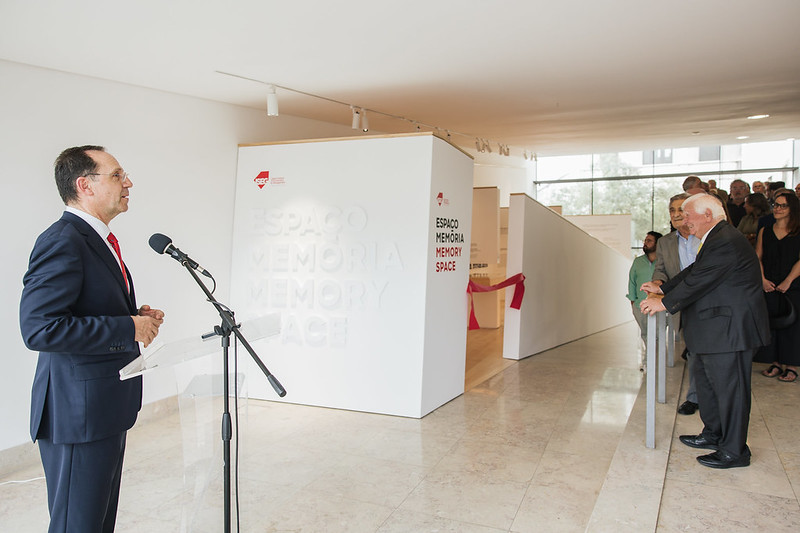
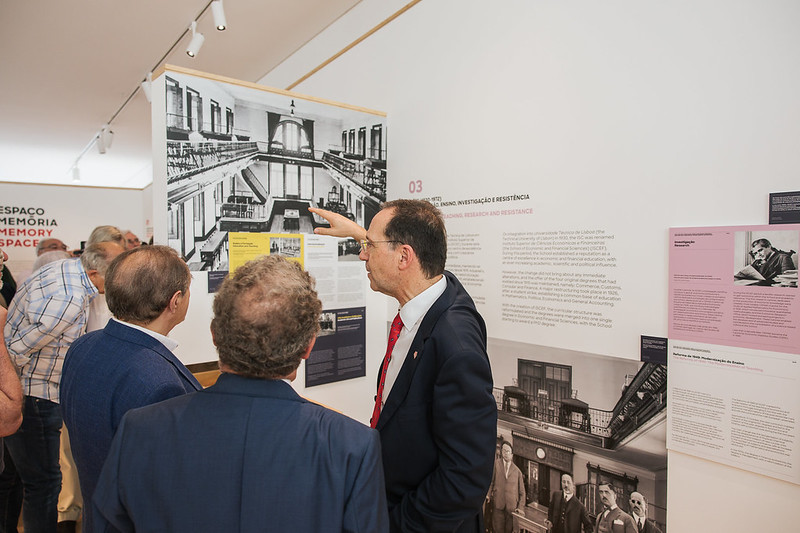
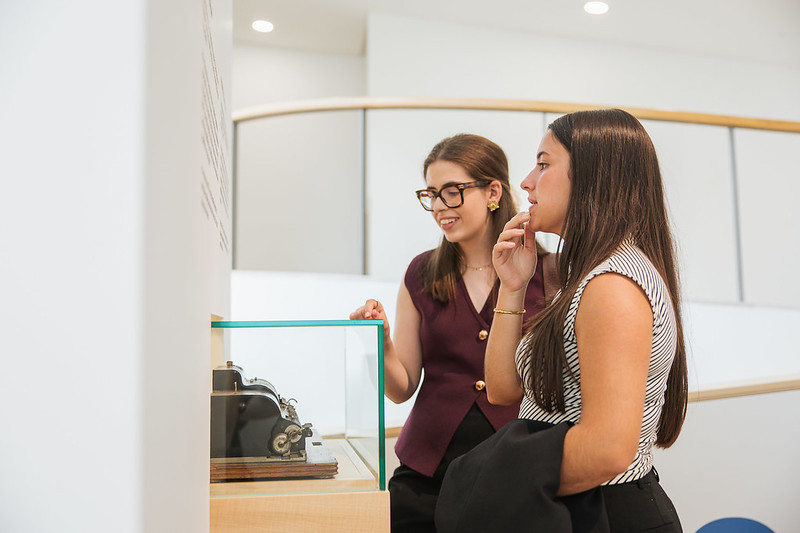
Through a carefully curated exhibition trail, the 'Memory Space' introduces us to the major milestones in ISEG's history, from the building's beginnings in the 16th century -- when it served as a shelter for foreign refugee nuns -- to its transformation into one of Europe's most prestigious economics and management schools. The project highlights the evolution of the School as a direct heir to the Aula do Comércio, the oldest public school of economics and management in the country.
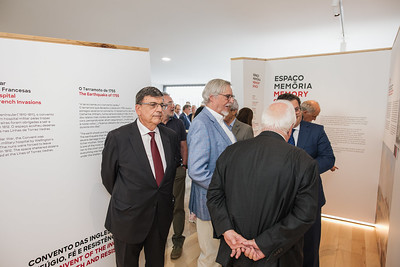
The exhibition includes historical pieces, emblematic documents, images from each era and multimedia resources that help put the different periods through which the School passed into context.
More than a chronology of facts, the project engages in a lively, sensory and engaging narrative that seeks to bring the academic community and the general public closer to ISEG's rich heritage and symbolism.
See HERE images from the inauguration.
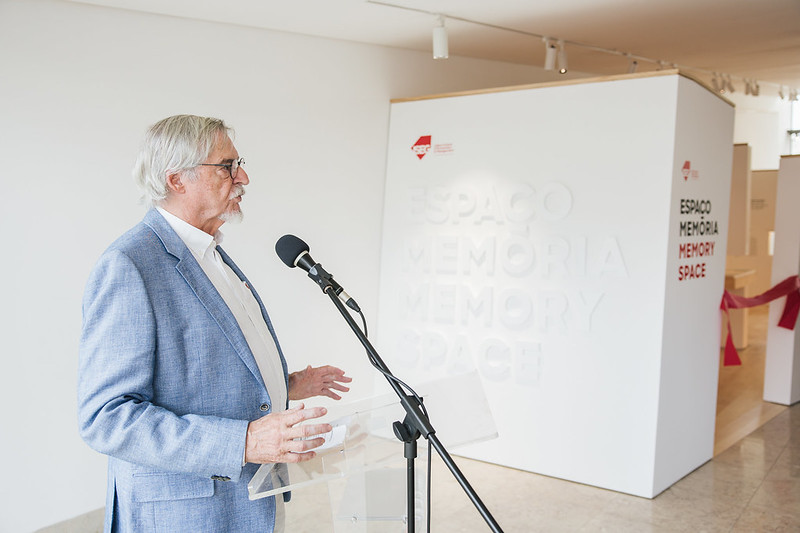
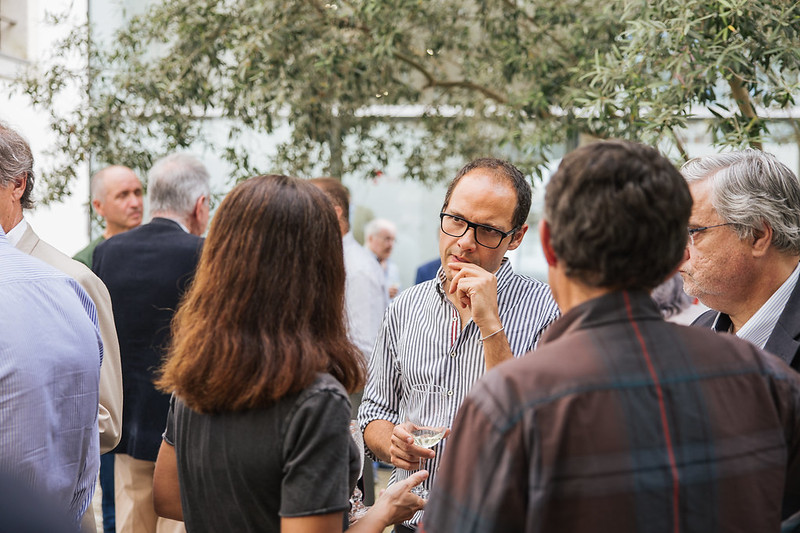
The inauguration included speeches by the Dean of ISEG, Professor João Duque, and retired professor Carlos Bastien, the exhibition's scientific curator. This was followed by the unveiling of the inaugural ribbon, in a symbolic moment that brought together various personalities linked to ISEG, including João Duque, Cândida Mourão (School Board representative), Eduardo Catroga (former student), Carlos Bastien, Joaquim Miranda Sarmento (ISEG professor and current Minister of State and Finance) and António Viana, who was responsible for designing and the execution of the project. Also present were dozens of current and former members of our School community - including students, professors and staff - who joined in for this milestone in the School's history.
The 'Memory Space' stands as a living testimony to ISEG's transforming role in Portuguese society, reflecting the political, social and educational changes
that have marked the country for more than a century. By opening the doors of this new space to the public, ISEG emphasises its commitment to the preservation of memory,
and with the enhancement of its legacy in the education of economics and management.
Developed on Microsoft's Azure OpenAI platform, this chatbot is powered by a rigorously validated knowledge base that is updated in real time. The solution was created by the Portuguese company Noesis, which specialises in developing AI tools, and represents a qualitative leap in the way universities interact with their various audiences.
"More than a technological response, this tool is a human response. We wanted something that was useful, clear, accessible and that would speak to people the way we normally do", says Winnie Picoto, Vice-Dean of ISEG.
The great advantage of this solution is its ability to respond fluidly, clearly and immediately to common queries -- from information on degrees and applications, to topics such as tuition fees, Erasmus and scholarships. All this in a friendly tone, with accessible language and without resorting to rigid menus or pre-formatted answers.
Although it uses generative AI, the chatbot will not learn autonomously from users, thereby guaranteeing total control over the consistency and reliability of its responses. This approach reflects ISEG's priority to maintain high quality standards in its communications.
The tool was developed collaboratively over 6 months, with the direct involvement of the IT, Marketing and Academic Services teams, students and faculty, ensuring that it was truly adapted to the needs of day-to-day academic life.
A new communication paradigm in higher education
This is the first generative AI chatbot launched by a university in Portugal. More than an automated response, this chatbot is a strategic element of the School's communication, at the service of the user experience and our digital reputation.
With this project, ISEG strengthens its reputation as a modern, innovative and people-oriented school, taking an important step towards simpler, more effective and more personalised communication.
About the partners
The Noesis created the system and was responsible for its technical implementation, bringing a robust and innovative approach to the project, based on cutting-edge technologies.
The Microsoft, through its Azure OpenAI platform, that has provided the generative AI infrastructure that powers all the chatbot's intelligence, guaranteeing scalability, security and reliability.
Graduates obtain the most significant salary improvement among Portuguese schools.
All graduates, without exception, find a job within three months of completing their Master's degree.
The ISEG Lisbon School of Economics & Management has once again been distinguished by the Financial Times' prestigious global ranking of the best Master's in Finance for the sixth time in a row. ISEG has been in the top 30 of this ranking for the past three years, climbing three positions in this 2025 edition, reaching the 27th place worldwide.
"This international recognition shows that ISEG is at the forefront of finance education, not only in Portugal, but also globally. We are proud to be in such a competitive ranking, which reinforces our mission to educate professionals of excellence, prepared for the challenges of an ever-changing world" says João Duque, the Dean of ISEG.
Among five Portuguese schools in the ranking, ISEG has strengthened its position in the Top 30, standing out for its three-month employability rate (100%) and improving the salaries of its graduates (84%). The Master's degree is one of the 20 best in the world for career progression.
It should be noted that the Master's in Finance is a CFA®-approved degree, which covers more than 70% of the syllabus required to become a Chartered Financial Analyst. It also offers five annual scholarships for this organisation's exams and its students benefit from a study trip to Frankfurt, including visits to the main European institutions, the stock exchange, banks, insurance companies and the best business schools of the region.
In the ranking, three business schools of Lisbonare included, reinforcing the city's growing relevance for education in finance in Europe. As a public school of Universidade de Lisboa, ISEG continues to establish itself as an academic benchmark of excellence, combining tradition, innovation and accessibility.
Its continued presence in the Financial Times ranking affirms ISEG's international projection and its commitment to quality education, supporting students' careers and creating a positive impact on society.
See the Executive Education 2025 ranking of Financial Times here.
The re-entry allows you to re-enroll in the same course (or a course that has succeeded it), even after a break in studies.
🔁 What is Re-entry?
It is the act by which a student, after having interrupted his or her education at a particular institution and course of higher education, re-enrolls in that institution. same institution and in the same courseor the course that replaced it.
📅 Registration period: of June 2-30, 2025
Don't miss the deadline!
ℹ️ For more information, see our website or contact the academic services.
Finish what you started - we're waiting for you!
The Calouste Gulbenkian Foundation has announced the launch of the 2025 edition of the Gulbenkian New Talent Scholarships. This is a programme for exceptional students in Portuguese higher education, which promotes their talent and encourages them to begin research in the areas of Science, Humanities, Arts and Social Sciences.
The scholarships include an immersive talent enrichment programme. In addition to a scientific retreat during the weekend, tutoring by a university professor of recognised merit will be included and monitoring by a Scientific Committee, creating an opportunity for potential talent to achieve exceptional and innovative performance.
To be eligible for this programme, students must be:
The annual value of the scholarship is calculated on the basis of three components:
The application period will run from 10.00 on 1 September to 15.00 on 30 September 2025.
Further information HERE.
🗓️ Application period: June 2-19, 2025
Take this opportunity to restart your academic career.
📌 Prepare your application and build your future!
ℹ️ Consultation here all the necessary information.
ISEG has announced the opening of a recruitment contest for 1 Assistant Professor of Operational Research.
Deadline for applications: July 9th, 2025.
Further information and applications here.
For further information, please contact the Human Resources Division at drh@iseg.ulisboa.pt.