









ULisboa is looking for international undergraduate and integrated Master's students to show what ULisboa is to those who are still deciding on their future.
To apply, all you need to do is:
The deadline for applications is 17 August 2025.
ISEG once again figures amongst the top internationally with its results in the Eduniversal Best Masters Rankings 2025, a ranking which evaluated more than 5,500 Master's degrees across 154 countries. This year, ISEG is present with 13 Master's degrees, one postgraduate course and its MBA, reflecting the excellence and diversity of its education offering.
Among the new features is the entry of the Master's degree in Applied Econometrics and Forecasting, in the area of Economics, as well as the significant rise of various Master's degrees:
The Master's in Actuarial Science remains at the top, at 1st place in Portugal. Other programs, such as MMIS, GAI, GEI, MF and the MBA, guarantee the 2nd place in Portugal in their respective areas.
Several Master's degrees achieved their best positions ever this year:
The results reflect ISEG's commitment to teaching quality, innovation and the international relevance of its degrees, preparing students for a successful future.
The European Journal of Management Studies (EJMS), ISEG's scientific journal on Management, has announced the EJMS Awards 2024.
The Best Article Award was attributed to H.A.D.M. Arachchi and G.D. Samarasinghe for their paper "Impact of embedded AI mobile smart speech recognition on consumer attitudes towards AI and purchase intention across Generations X and Y", published in Volume 29, Issue 1 of the Journal. The paper analyses the impact of intelligent voice recognition, supported by artificial intelligence in mobile devices, on consumer perception and purchase intent among generations X and Y. The paper can be consulted on this link.
The Best Reviewer Award distinguished João Aparício, a researcher at the Instituto Superior Técnico, Universidade de Lisboa, for his exceptional contribution to the rigour and quality of the EJMS scientific review processes.
Universidade de Lisboa joins the Solidarity Concert, together with the Orquestra Médica Ibérica, with Mário Laginha, and the Australian Orchestra Corpus Medicorum.
The concert will take place at Aula Magna of Universidade de Lisboa, on 6th September, at 18.00 and is part of Music at Universidade de Lisboa.
There is a single purpose: to unite efforts, musicians and melodies around the project Crowned Hearts Association (CCC) which has already had a positive impact on the lives of more than 1,000 women and girls.
Chaired by Catarina Furtado, Goodwill Ambassador for the United Nations Population Fund, the CCC works in defence of human rights and their effective application, with a special focus on projects to empower women and girls.
Made up of doctors and medical students from Portugal and Spain, the Orquestra Médica Ibérica (Iberian Medical Orchestra) has come together to promote universal access to quality healthcare. It currently has around 400 musicians enrolled, from more than 40 cities across the Iberian Peninsula. Here they have the opportunity to swap their gowns for musical instruments and the hospital for the stage.
It is in this permanent dynamic that the Iberian Medical Orchestra has given presentations in Lisbon, Braga, Barcelona, Madrid, Porto and Granada, and has already raised more than €45,000 for different institutions.
Proceeds will go to the Corações Com Coroa Association.
Tickets For Sale!
The applications period will be open until 31 August for the Pedagogical Innovation Award. The objective of this initiative is to recognise the merit of faculty and researchers at Universidade de Lisboa who have distinguished themselves through the use of impactful teaching practices in course units of any kind.
Regulations (PDF)
Public Notice (PDF)
Application form (PDF)
Rationale (word)
Declaration of Consent (word)
The purpose is to hear all the different voices from our academic community, including students, faculty, researchers and staff, alumni, partners and citizens.
We're counting on you to fill out this short survey and share your perspective.
Your opinion is essential for us to create an even better ULisboa together.
Participate here!
As part of the fulfilment of ISEG's Mission and Strategy, the Dean's Office has published the Rules and Regulations for hiring Tutors and Graders for Bachelor's degrees for the 2025/2026 academic year. See the Regulations: PT version / ENG version.
Find out more HERE about which CUs need tutors.
Applications must be submitted by completing the following form this form. Should you have any further questions, please send an email to the following address: tutoresegraders@iseg.ulisboa.pt.
ISEG has announced the opening of a recruitment contest for two Full Professors and three Assistant Professors .
For further information, please contact the Human Resources Division at drh@iseg.ulisboa.pt.
The second edition of Unite! Research School will take place from 3-7 November 2025, in Autransnear Grenoble.
This year's programme will highlight some of today's most critical and captivating topics, including space and technology, biology, artificial intelligence (AI) and cybersecurity. It will also explore the transversal skills needed by aspiring scientists...
This course is a Blended Intensive Programme (BIP), which awards 3 ECTS to Master's students and 30 hours of training to PhD students, upon completion.
Applications: on the platform Metacampus
Deadline for applications: 30 July 2025
For more information, contact Professor Luís Silveira (lms@tecnico.ulisboa.pt) and visit the official site of Unite!
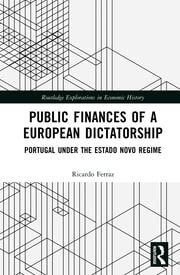
The new book by Professor Ricardo Ferraz, entitled Public Finances of a European Dictatorship: Portugal under the Estado Novo Regime, is now available on the website of the prestigious British publisher Routledge, part of the group Taylor & Francis.
The book has a Foreword by Professor Joaquim Miranda Sarmento and an Afterword by Professor Nuno Valerio.
This book contributes to the growing interest in economic history, especially in the role played by peripheral or smaller countries. With a rigorous and detailed approach, Ricardo Ferraz analyses the evolution of Portuguese public finances during the authoritarian Estado Novo regime (1933-1974), led mainly by António de Oliveira Salazar.
The author contextualizes the Portuguese case through international comparisons of key macroeconomic indicators and uses econometric techniques to assess the sustainability of public finances in the period under analysis, both in Portugal and in other European countries.
The book highlights the pioneering attempt at long-term economic planning in Portugal, which came to fruition with the Economic Reconstruction Act (1935-1950). It also analyses the effects of the Second World War and the so-called "collaborative neutrality", the subsequent industrialisation and internationalisation of the Portuguese economy, and the profound impacts of the Colonial War (1961-1974) on the public accounts.
Exploring primary and secondary sources relating to State revenue and expenditure, Ricardo Ferraz reveals the main challenges faced in relation to budget management and public indebtedness during a period marked by profound transformations and crises.
Public Finances of a European Dictatorship is essential reading for academics, researchers and anyone interested in the economic and financial history of Portugal and Europe in the 20th century.
The work is available on the Routledge website, in both printed and digital versions.