




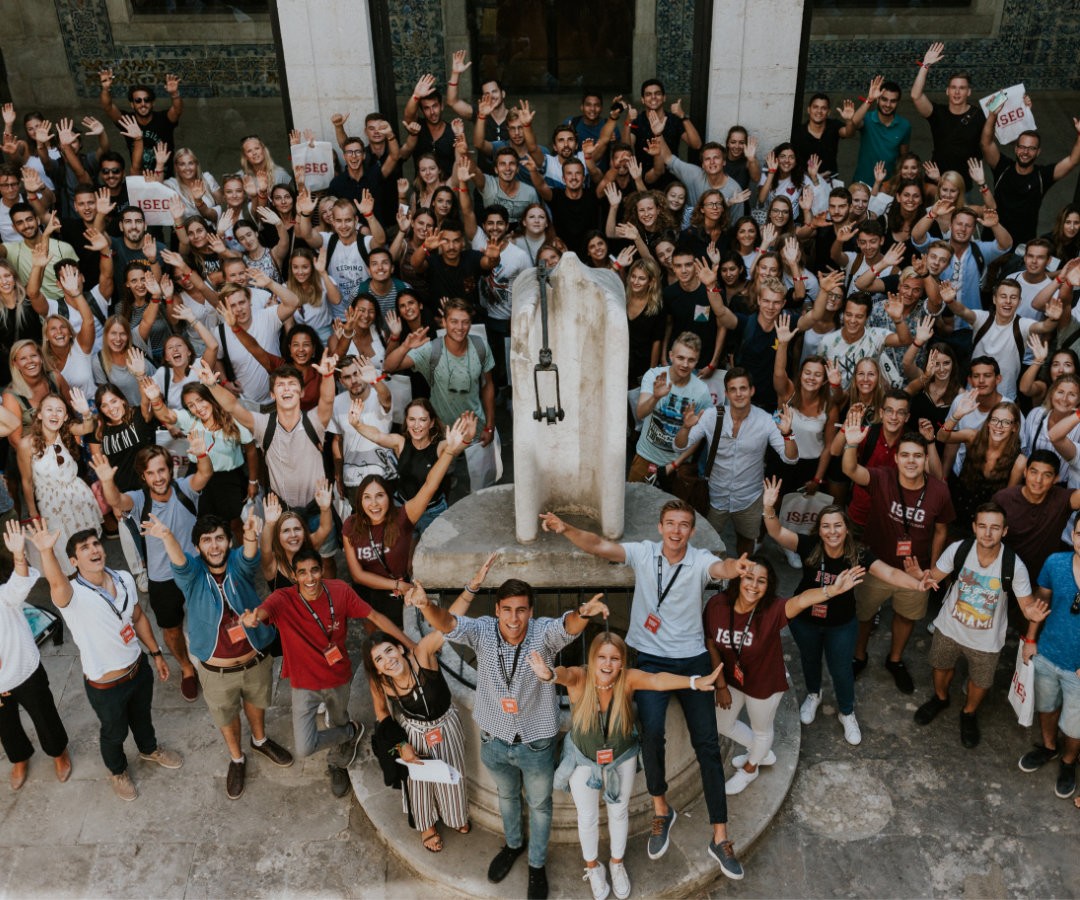





On October 14, at 6:30 p.m., takes place at the FNAC Colombo, the book launch Machine Learning with Python, by Jorge Caiado, Professor at ISEG.
The session will be devoted to a discussion about the Fundamentals and Techniques of Machine Learning and Data Science, key topics in a field of growing importance in data analysis and processing.
The presentation will be given by Nuno Crato (researcher and former professor at ISEG), Mário Caldeira (Dean of ISEG) and Pedro Janeiro (former ISEG student).
📅 October 14 | 6:30 p.m.
📍 FNAC Colombo
Join us!
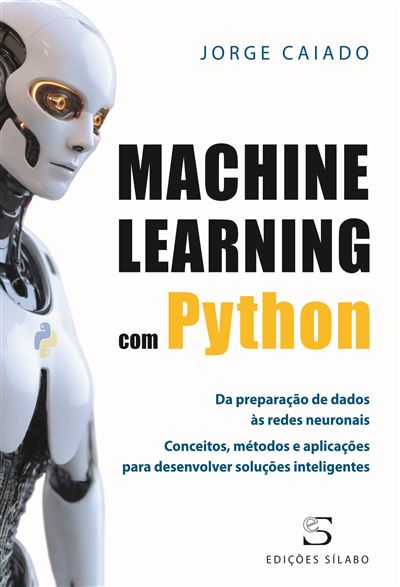
Synopsis
With a strong practical focus and a reader-centered approach, this guide teaches you how to learn and apply the fundamentals and techniques of machine learning and data science using Python. Artificial Intelligence is profoundly transforming the way we analyze data, make predictions, and support decision-making.
At the heart of this revolution lies machine learning, a set of methods that allows computers to learn from data and discover patterns, trends, and relationships without being explicitly programmed for each task. Machine Learning with Python is a thorough, practical guide for anyone who wants to master the fundamental techniques of machine learning using the most popular programming language in data science.
With a progressive, problem-solving approach, the book guides the reader from the fundamentals of Python and data preparation to the construction, evaluation, and interpretation of machine learning models applied to real-world situations.
Throughout the book, the main supervised and unsupervised learning algorithms are presented in a clear and intuitive manner, including linear and logistic regression, decision trees, random forests, support vector machines, neural networks, clustering methods, dimensionality reduction, and anomaly and outlier detection, using the most widely used libraries in the Python ecosystem, such as NumPy, Pandas, Matplotlib, Seaborn, and Scikit-learn.
Each chapter includes complete examples, suggested exercises, applications using real data, and best practices for development, allowing readers to consolidate the knowledge they’ve acquired and apply it immediately. More than just teaching algorithms, this book shows how to structure a complete data science project—from importing, preparing, and exploring data, through variable selection, model training, and performance evaluation, all the way to critically and thoughtfully interpreting results.
The book also presents applications powered by generative artificial intelligence tools, illustrating new ways to accelerate programming, documentation, and learning. Intended for students, researchers, and professionals in the fields of economics, management, finance, engineering, computer science, marketing, healthcare, social sciences, and other quantitative disciplines, this book is an essential resource for anyone seeking to develop solid skills in machine learning and data science with Python.