




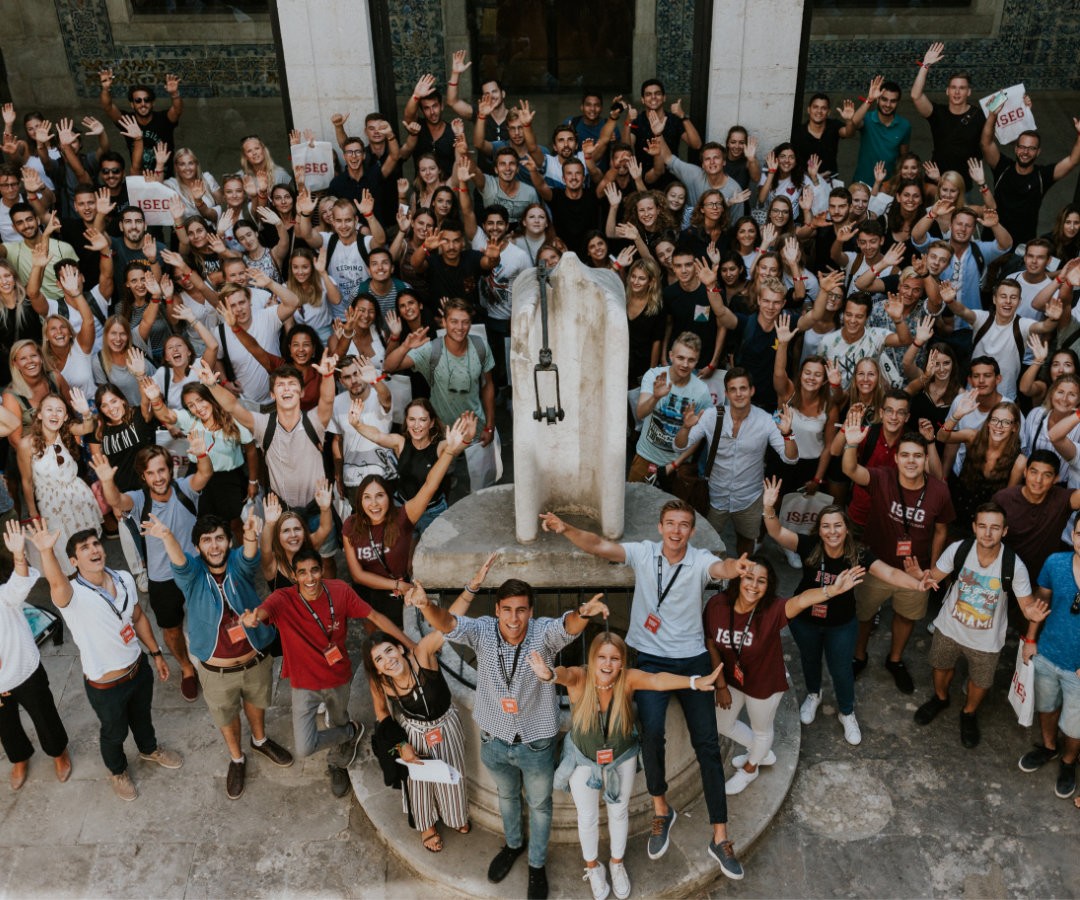





ISEG hosts the conference "Natália Correia: Poetry as Prophecy", on 27 May, starting at 6 p.m., in Auditorium 2 (Quelhas, 2nd Floor).
Organised by ISEG Alumni Económicas Cultural Group, the conference will feature the writer and journalist Fernando Dacosta and will be moderated by Mário Máximo and Hélder de Oliveira.
Free admission, subject to room capacity.

The next research seminars in the ISEG Research Seminars'25 cycle will take place on 14 and 15 May, from 13.00 to 14.00, in ISEG's Lecture Theatre 3 (Quelhas, 4th Floor).
The seminar on 14 May, the keynote speaker Improbable Professor Carlos Oliveira, who will present a paper on "Investment in two alternative projects: combining optimal switching with the exit option". For the seminar on the 15th, Professor Brian Knight, from Brown University (USA), will present the research paper "Policing for profit? Evidence from post-Ferguson reforms in Missouri". The abstracts of both papers can be found below.
The 2nd Semester Research seminars will be run weekly until 4 June, and feature professors from ISEG and other Portuguese and international schools. Read more HERE.
Free admission, subject to room capacity.
"Investment in two alternative projects: combining optimal switching with the exit option" (co-authored with Cláudia Nunes and Igor Kravchenko)
We use an analytical framework to examine a firm's investment and switching strategy under uncertainty. The context is the possibility to launch and operate two distinct projects, one at a time, with exposure to a stochastic exogenous price. We allow for multiple switches between the two projects, along with abandonment options from each. These possibilities fundamentally influence the operational strategy. We show that under some conditions, a dichotomous waiting region may arise at the investment stage. In this case we have an inaction region, for a range of prices in a certain bounded interval, where the firm does not invest and waits to have more information about the price evolution. This region vanishes for a high level of uncertainty. Additionally, the firm may operate with a negative instantaneous profit. We prove that investment in this region is never optimal. Numerical examples enable comparative statics, while extension to allow for time-to-build is included.
"Policing for profit? Evidence from post-Ferguson reforms in Missouri"
In the United States, fines and fees from policing can be a major source of government revenue. Critics argue this incentivizes law-enforcement to maximize collections rather than safety. We investigate this issue in the context of a series of reforms in Missouri designed to curb policing for profit after the 2014 shooting of Michael Brown in Ferguson. In the time series, we document large aggregate declines in per-capita collections and traffic stops immediately after the shooting. The aggregate decline is concentrated in municipalities raising significant revenue from collections at baseline and in locations with the motive and opportunity to engage in policing for profit. Examining specific reforms, we find that a 20 percent cap on revenue from policing introduced after Ferguson can explain as much as half of the aggregate decline. Taken together, our findings highlight both how revenue motives can distort the criminal justice system, and how simple reforms that realign real-world incentives can change police behavior.
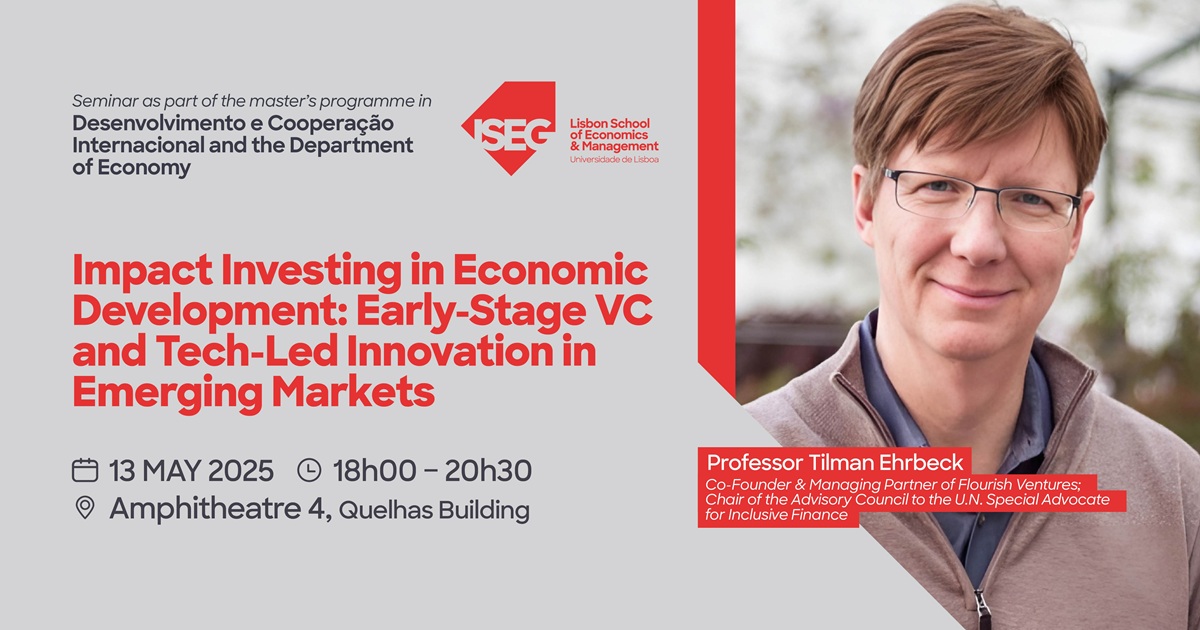
ISEG is organising a seminar on "Impact Investing in Economic Development: Early-Stage VC and Tech-Led Innovation in Emerging Markets" on 13 May, from 18.00 to 20.30, in Lecture Theatre 4 (Quelhas, 4th Floor).
This seminar is being held as part of the Master's in Desenvolvimento e Cooperação Internacional and will be given by Professor Tilman Ehrbeck, co-founder and Managing Partner of Flourish Ventures, and Chairman of the Executive Board for the United Nations Special Advocate for Inclusive Finance.
Free admission, subject to availability.
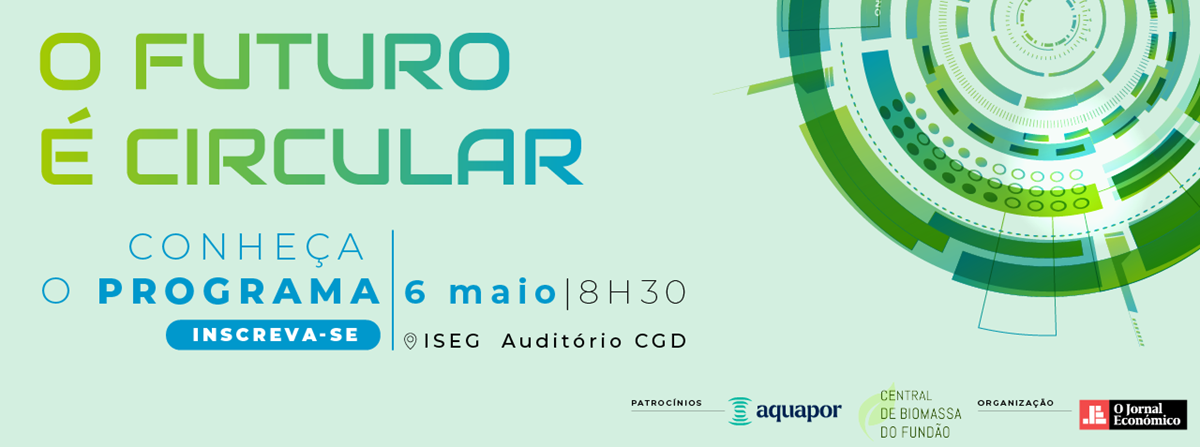
ISEG will host the conference "The Future is Circular", on 6 May, starting at 08.30, in CGD Auditorium (Quelhas, 2nd Floor).
The event is being organised by the Economic Journal, in partnership with Aquapor and Fundão Biomass Plant, and will bring together political decision-makers, business leaders and experts to debate the major challenges and opportunities facing the circular economy in Portugal.
The programme will discuss topics such as the adoption of circularity by companies, the transformation of value chains, and the role of public policies and strategies to achieve a more sustainable future and efficient resource management.
Free participation, subject to prior registration on this link.
Further information and the full programme available HERE.
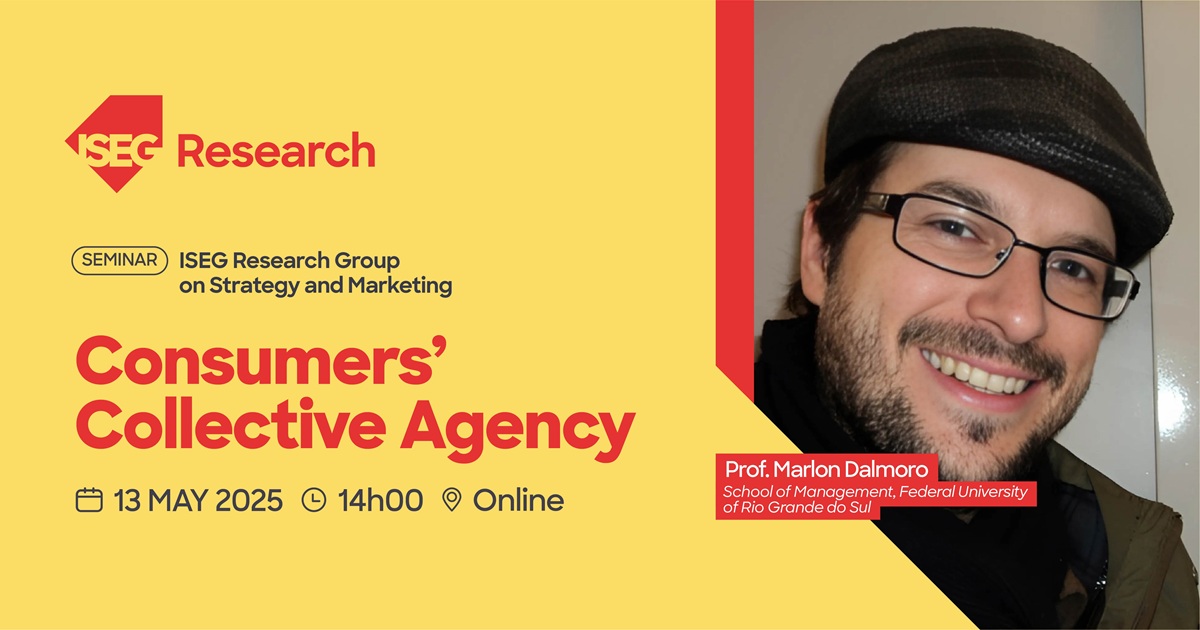
The ISEG Research Group on Strategy and Marketing organizes the Webinar 'Consumers' Collective Agency' on 13 May, from 14.00 to 15.00.
The seminar's keynote speaker Improbable Professor Marlon Dalmoro, from School of Management of Universidade Federal do Rio Grande do Sul (Brazil). This session will be given in Portuguese.
Access to the webinar is free and no prior registration is required.
Watch the event on Microsoft Teams, on this link.
ISEG is organising a new session of the Research Seminars on 7 May, from 13.00 to 14.00, in ISEG's Lecture Theatre 3 (Quelhas, 4th Floor).
This seminar will have as its keynote speaker Improbable Professor Marco Fongoni, from Aix-Marseille School of Economics, who will present a paper on 'Aspirations as Reference Points, the abstract for which can be found below.
The 2nd Semester Research Seminars will be held weekly up until 4 June and will feature members of ISEG's faculty, as well as from other Portuguese and international universities. Further information HERE.
Free admission, subject to room capacity.
We develop a model of individual effort choice towards the achievement of an outcome, where the individual compares realized outcomes in relation to an aspiration reference point. We provide sufficient conditions for the dual nature of aspirations: moderate aspirations can motivate, but excessively high aspirations can discourage; and for the existence of states in which aspirations are fulfilled. We then study how this non-monotonic relationship between aspirations and effort interact in a dynamic environment when aspirations are endogenous to the individual's realized outcomes in the past. We show how behavioural traits such as aversion to failure and perseverance can crucially affect an individual's achievements along the equilibrium path, providing a novel perspective on the dual effect of aspirations on economic behavior: holding excessively high aspirations can be frustrating, but can also lead to generating strictly better outcomes when individuals particularly dislike failure and are perseverant in the pursuit of their goals.
The OAIP - Observatory for Pedagogical Action and Innovation is organising the seminar 'AI as a Co-Supervisor: AI Tools for Research Productivity' on 8 May, from 12.30 to 13.30, in ISEG's Auditorium 4 (New Quelhas).
The seminar will address the potential of Artificial Intelligence platforms (such as ChatGPT, among others) in conducting research, particularly in the context of Final Master's Work. The keynote speaker will be keynote speaker Improbable Professor Tiago Cruz Goncalves.
Free admission, subject to room capacity.
ISEG hosts the presentation of International Monetary Fund Fiscal Monitor - April 2025 on 30 April, from 14.00 to 15.00, in the Novo Banco Room (Quelhas, 4th Floor).
The presentation will focus on the chapter of the report addressing "Public Sentiment Matters: The Essence of Successful Energy Subsidies and Pension Reforms" , the abstract of which can be found below, and will be given by speakers:
Free admission, subject to availability.
The chapter explores strategies to increase public support for reforms in spending programmes, such as energy subsidies and public pensions. Reforms aim to reduce budget vulnerabilities, promote efficiency and inclusive growth, and are often challenged by social resistance. Based on language models applied to print media, the chapter proposes an innovative metric for the acceptability of reforms in real time. The results suggest that gradual measures, implemented in contexts of higher growth, with strategic communication and redistributive policies, are better received.

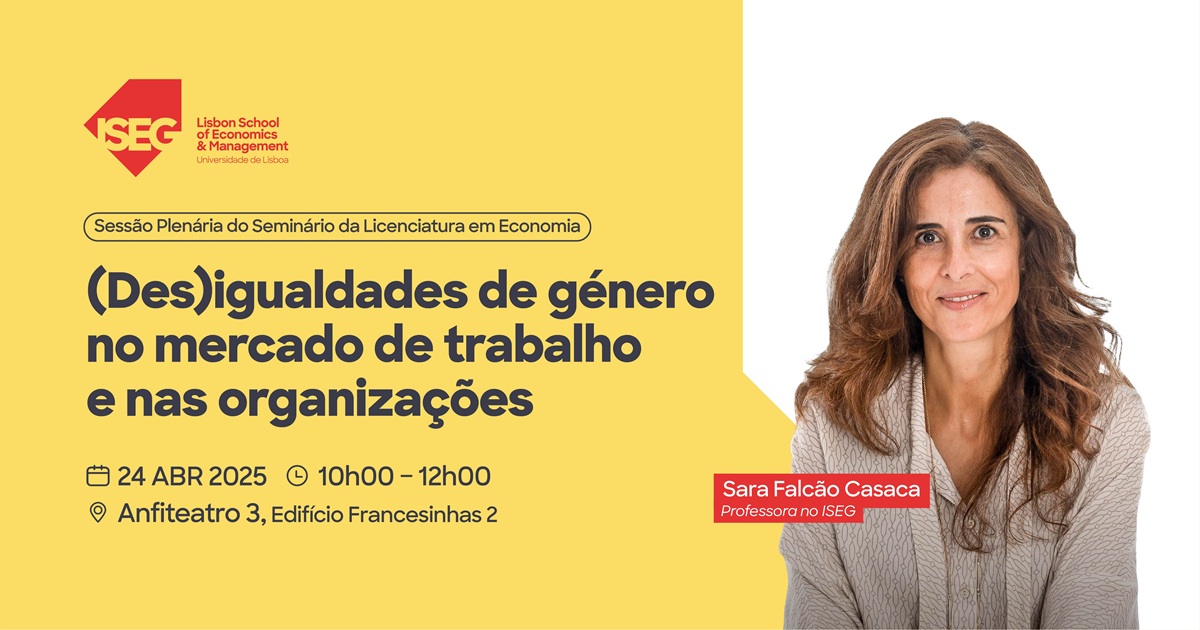
ISEG is organising the plenary session "(Gender) inequality in the job market and in organisations" on 24 April, from from 10:00 to 12:00, in ISEG's Lecture Theatre 3 (Francesinhas 2, Floor -1).
The session is organised as part of the Seminar of the Bachelor’s degree in Economics; the keynote speaker will be Professor Sara Falcão Casaca.
Free admission, subject to capacity.
The ISEG Research Seminars will be held on 30 April, from 13.00 to 14.00, in ISEG's Lecture Theatre 3 (Quelhas, 4th Floor).
The keynote speaker to ISEG Professor Alba Miñano-Mañero, who will present a paper on "City buzz: face-to-face interactions and the urban environment", the abstract for which can be found below.
The 2nd Semester Research Seminars will be held weekly up until 4 June and will feature members of ISEG's faculty, as well as from other Portuguese and international universities. Further information HERE.
Free admission, subject to room capacity.
We combine mobile phone call and location data from the United Kingdom to examine the relationship between urban form and face-to-face interactions. We define face-to-face interactions as coincidences in space and time of two individuals who know each other, as evidenced by mobile phone call records. Our analysis explores how the quantity and variety of these interactions vary with an individual's urban environment. Crucially, we disentangle the extent to which these patterns result from the sorting of more sociable individuals into denser areas versus the direct influence of urban characteristics themselves.