







The call for PhD scholarships is now open, within the scope of European University Unite!, under the existing partnership protocol between FCT and ULisboa, until December 20, 2025.
ULisboa will award a total of 30 grants in the following priority areas (although other areas are not excluded):
Applications should be submitted to: candidaturas.rh@reitoria.ulisboa.pt
Under the terms of article 172 of the RJIES and the Code of Administrative Procedure (Articles 101 et seq.), ISEG hereby gives notice that there is in process a public consultation of : a proposal to amend Article 40 of the ISEG Statutes, available on this link.
Purpose of the Amendment
Changes to ISEG's organisational chart
Deadline for Contributions
The public consultation runs from 28th November and 14th January, for a period of 30 working days.
Contributions should be sent to: drh@iseg.ulisboa.pt
On December 2, the “la Caixa” Foundation is organizing an event at TTC@ULisboa. presentation session of its Scholarship Program, aimed at those wishing to pursue a postgraduate or doctoral degree abroad...
The meeting includes a presentation by the heads of the doctoral and postgraduate scholarship programs, followed by a question and answer session.
This is an opportunity to find out in detail about the requirements, benefits and possibilities offered by one of the most prestigious international study support programs.
On this National Day for Scientific Culture in Portugal, we would like to highlight the fundamental role that the ERC Grants play in the panorama of Science and Innovation at Universidade de Lisboa.
The ERC Grants were created in 2007 by the European Research Council and Universidade de Lisboa is the university with the most grants in Portugal, with around 50 grants totaling close to 80 million euros.
These grants represent more than 25% of the national total, a figure that demonstrates the role of Universidade de Lisboa as a driver of innovation and knowledge in Portugal and Europe.
The funded projects contribute to advances in areas such as health, natural sciences, social sciences and engineering. In the words of Professor Cecília Rodrigues, Vice-Rector of ULisboa, the ERC grants allow “frontier, high-risk research with great potential for innovation and scientific impact” to be carried out.
ULisboa is committed to strengthening participation in competitive programmes, promoting dissemination actions, training and personalised support. ULisboa regularly organises initiatives aimed at those applying for grants of excellence, such as the ERC, in close collaboration with experts in attracting European funding.
In the video, we highlight some of the projects that have benefited from this funding: Edgar Gomes (GIMM, School of Medicine from ULisboa), Inês Fragata (School of Science from ULisboa), Marco Piccardo (INESC-MN, Instituto Superior Técnico of ULisboa) and Marina Costa Lobo (Institute of Social Sciences of ULisboa) give us an insight into the role of these grants in the research carried out at ULisboa.
Universidade de Lisboa has achieved high world rankings, having been placed 7th in Naval and Ocean Engineering, 20th in Civil Engineering, 39th in Veterinary Sciences and 48th in Oceanography.
The Global Ranking of Academic Subjects (GRAS) 2025, published by the ShanghaiRanking Consultancy, also positions the ULisboa in the top 75 in Water Resources, in the top 150 in Statistics, Ecology, Economics, Agricultural Sciences and Atmospheric Sciences, and in the top 200 in Physics, Earth Sciences, Geography, Electrical and Electronic Engineering, Automation and Control, Instrument Science and Technology, Transport Science and Technology, Remote sensing, Pharmacy and Pharmaceutical Sciences, reflecting the scientific excellence and international prestige of Universidade de Lisboa.
The ULisboa is leader nationally in 23 areas and is present in 41 of the 57 areas evaluated, covering Natural Sciences, Life Sciences, Engineering, Medical Sciences and Social Sciences. It also stands out for being Portugal's only university included in the CWUR ranking in Geography, Automation and Control, Remote Sensing, Medical Technology, Transportation Science and Technology, Water Resources, Statistics and Political Science.
The Shanghai Ranking Global Ranking of Academic Subjectswas created in 2009 and is internationally recognised as one of the most prestigious higher education rankings. The 2025 edition published the evaluation of around 2,000 universities from 92 countries. The CWUR ranking uses criteria that include research productivity and quality, academic awards and international collaboration.
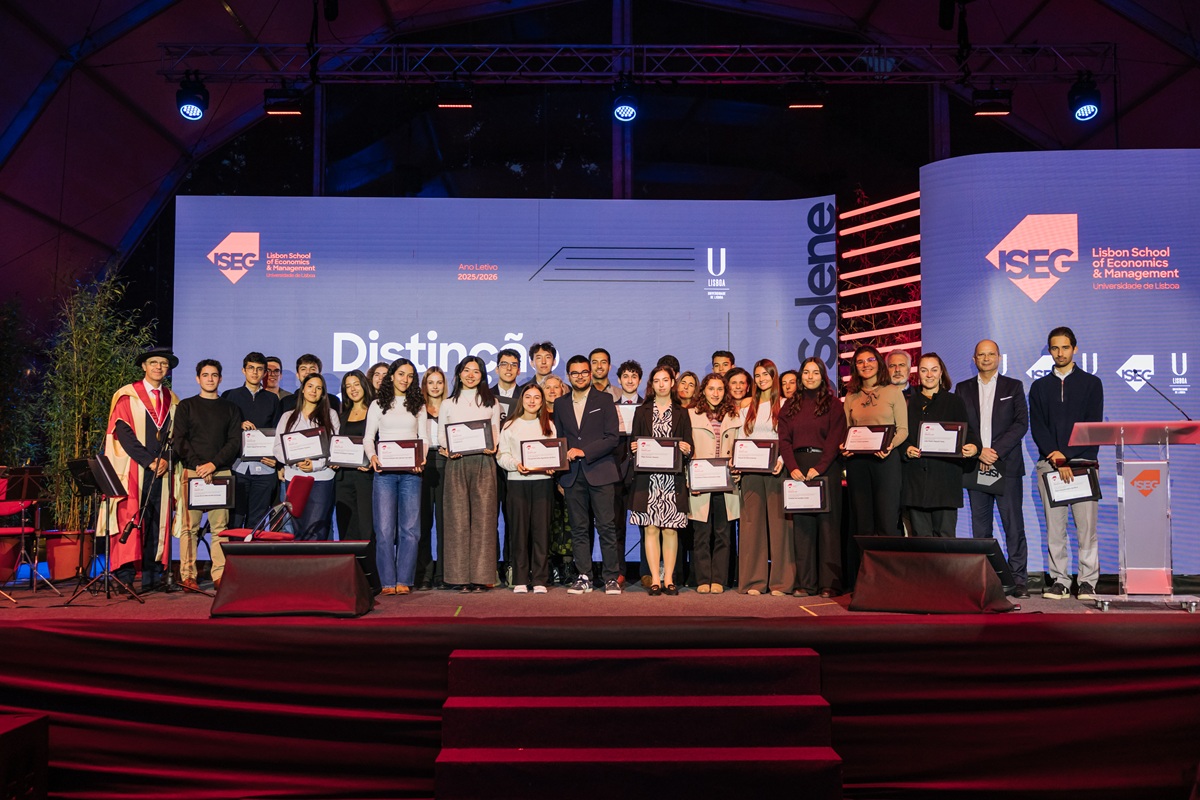
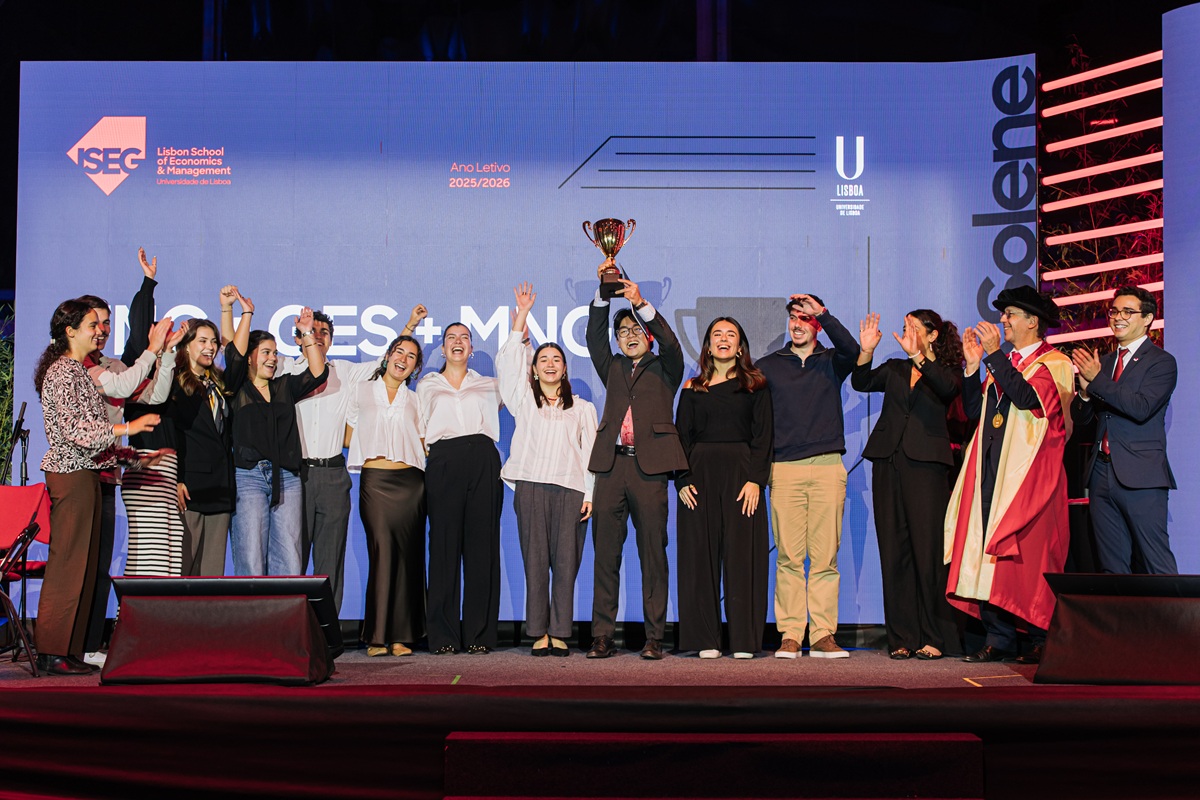
On November 20th, at 17.00, ISEG - Lisbon School of Economics & Management held its Solemn Session for the opening of the 2025-2026 Academic Year, which took place in the emblematic Pátio das Francesinhas. The event, broadcast live on ISEG's YouTube channel, brought together ISEG's academic community and partners to celebrate the School's academic, scientific and institutional excellence.
The session opened with a speech by the Dean of ISEG, Professor João Duque, followed by the award of the “Dean's List” Merit Award and the ISEG Sports Excellence Award, which distinguished students with high academic and sporting performance.
One of the central moments of the programme was the Academic Lecture by Professor Rui Paulo entitled “Statistics and Uncertainty”.
Various scholarships and merit awards were also given, recognising the effort, talent and achievements of ISEG's best students.
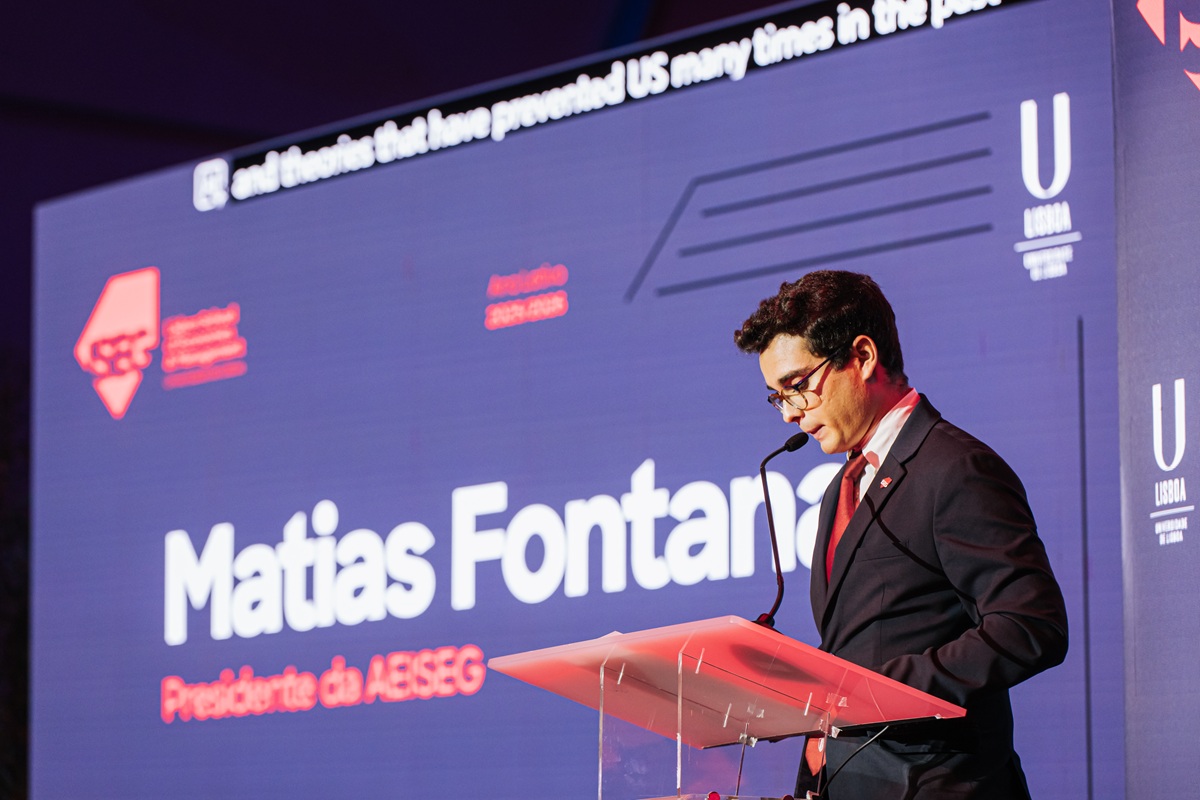
The President of the ISEG Students' Association, Matias Fontana, also spoke at the ceremony, giving his last speech as President of AEISEG.
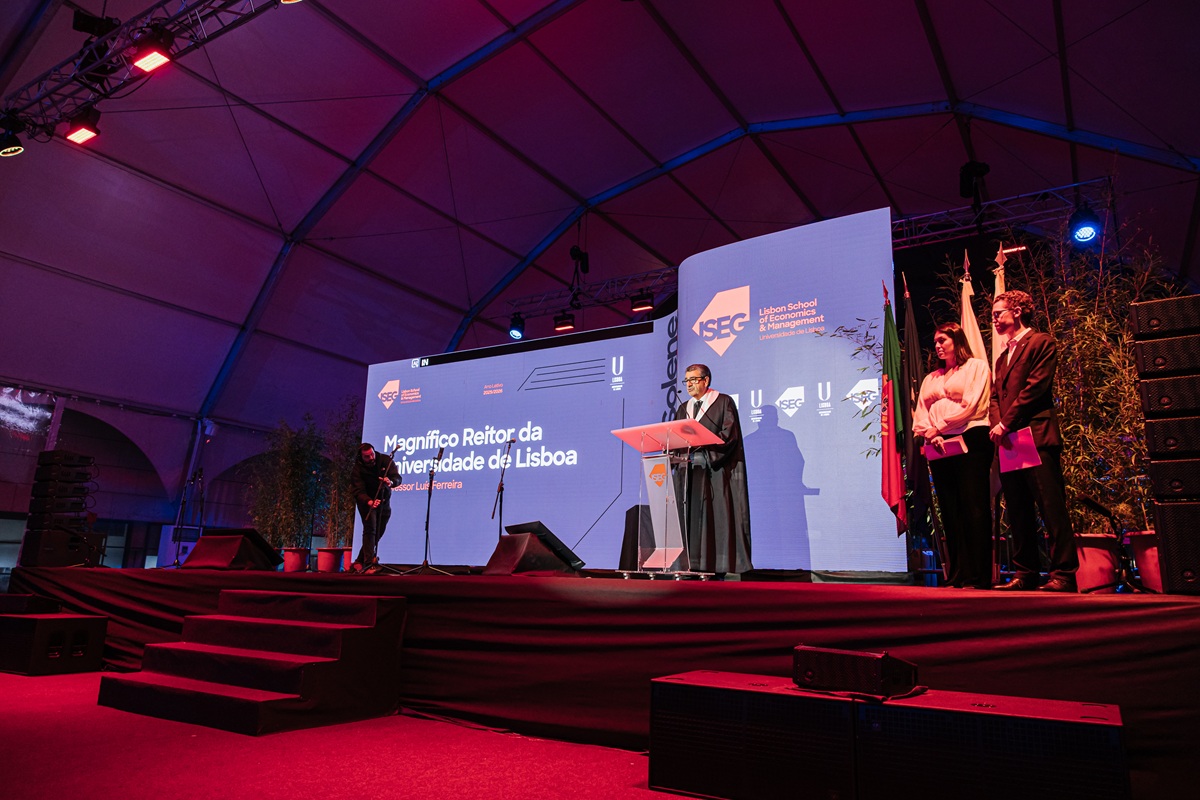
The ceremony also included the traditional ISEGUÍADAS Championship, a musical performance, the awarding of prizes to the best teachers, the recognition of retired teachers and staff, the awarding of aggregation diplomas and the presentation of insignia and epitaphs by the Rector of the University of Lisbon, Professor Luís Ferreira, who also gave a formal speech.
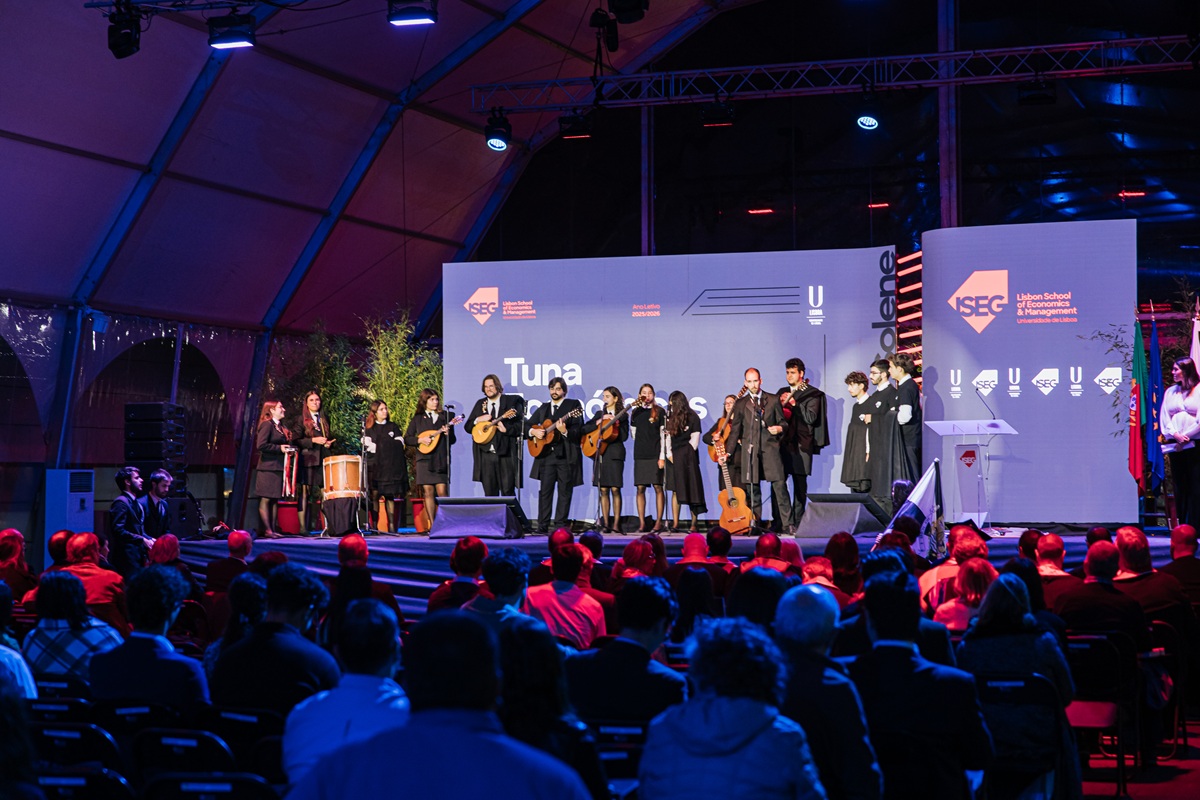
The ceremony ended with a performance by Tuna Económicas, bringing to a close an event that celebrated ISEG's commitment to excellence, merit and academic tradition.
Photo Report here.

On December 6th, the 24th Lisbon University Opera Gala - Between Loves and Masks from Tragedy to Laughter, at 21h30, in the Rectory's Master Class, as part of the Music at Universidade de Lisboa.
The show will feature the participation of Youth Symphony Orchestra, of the University of Lisbon Choir (CUL) and the Choir of the Gregorian Institute of Lisbon, under the direction of conductor João Defesa.
The entrance fee is free, by picking up an invitation at the ULisboa stores of the Rectory and the Kaleidoscope, until December 5th.
A special evening where music leads the audience through stories of love, humor and emotion.

The winners of the 2025 ISEG ESG Award were on stage at the Web Summit Lisbon, on Thursday, 13 November, at the world's largest innovation and technology event, to share their ideas and reflections on the role of business and academia in building more sustainable cities.
The “Lisboa Sustainable Minds: Shaping a Greener Future for Business - What if companies could shape the future of cities through ESG?”session, moderated by Professor Winnie Picoto, Vice-Dean of ISEG, gave visibility to the talent and vision of the students who represented ISEG at this highly prestigious event.
This moment underlines the importance of the link between academic work in sustainability and its application in the real world, demonstrating how the knowledge produced in universities can support companies and other organisations in responding to the environmental, social and governance challenges that are of unavoidable relevance today. The participation of our students in the Web Summit highlights the real impact of ISEG's research and its contribution to concrete solutions that inspire sustainable transformation.
Special thanks to the students Madalena Santos, Miguel Lopes and Joana Ramos, to Prof. Winnie Picoto, to Gabriel Londe Medeiros, to Maria João, to Nuno Caleia and Paula Alves of the Lisboa Sustentável-Empresas Platform of the Lisbon City Council, and to Pedro Fonseca and Catarina Pedrinho from NTT DATA, great partners thus far, for the involvement and dedication that made this moment of sharing and inspiration possible.
This “Ranking of Entrepreneurial Universities”, awarded on the basis of metrics of entrepreneurship and innovation capacity of universities, was announced by Startup Portugal in the “Ranking the Universities - How can academia boost this Ecosystem?”, which took place on Tuesday, 11 November, at the Web Summit in Lisbon.
This Ranking of Entrepreneurial Universities, awarded on the basis of metrics of entrepreneurship and innovation capacity of universities, was presented during the session “Ranking the Universities - How can academia boost this Ecosystem?”, which featured a short talk on how academia can help transform research projects and transfer academic knowledge to the wider economy.
This distinction is in line with the results of the ULisboa Startup Impact Report 2025, carried out with Dealroom, which highlights the impact of ULisboa on the national ecosystem. According to the study, there are already more than 1,000 startups launched by students and alumni of ULisboa, with an aggregate valuation of more than 24 billion euros, present in more than 40 countries and which have raised more than 850 million euros in venture capital since 2024 alone.
From the universe of startups with ULisboa DNA, 4 out of the 6 national unicorns have emerged, namely Talkdesk, Tekever, Outsystems and Anchorage Digitail. From the startups founded by Alumni ULisboa, also emerging as a potential unicorns are companies such as Cambrian, Unbabel, Distalmotion and Amboss . Also considered as “rising stars”, i.e. companies valued at more than 200 million euros, are Bhout, Stake, Bloq.it, Indie Campers and Busup.
“This recognition reflects ULisboa's commitment to promoting entrepreneurship, innovation and the transfer of knowledge to society. It's a result that belongs to our entire academic community”, emphasises Francisco Correia dos Santos, Vice-Rector of ULisboa.
For all these reasons, ULisboa is today the most entrepreneurial university in Portugal.
Structures such as the Técnico Innovation Centre, Tec Labs and ULisboa's Technology Transfer and Knowledge Enhancement Centre, combined with accelerator programmes, open innovation and Interdisciplinary Networks, can help transform research projects and transfer scientific knowledge to the market, with an impact on the national economy.
On November 19th and 20th, from 10 a.m. to 4 p.m., another Solidarity Book Fair, organized by MAIS - More Awareness in Society from ISEG, in partnership with the Caped Heroes. Proceeds benefit the Association ATTACK, a NGO which supports children and young people in vulnerable situations in Africa.
For two days, the academic community is invited to buy and donate books, contributing to a good cause and promoting the spirit of solidarity and culture on our campus.
This initiative is an excellent opportunity to giving new life to books, to encourage reading and support projects with a positive social impact.
Location: Entrance to Building F2
Dates: November 19th and 20th
Time: 10h00 - 16h00
Don't miss this chance to take part, discover new reads and make a difference!